What Is OCD?
OCD involves intrusive thoughts, fears, urges, or images and the repetitive behaviors or mental rituals used to reduce distress. Symptoms can consume time and interfere with work, school, relationships, and daily routines.
Before Treatment
dTMS may not be appropriate for everyone. Our team reviews medical history before treatment.
Coverage for OCD dTMS varies by plan and may be less predictable than coverage for depression. Some plans may require prior authorization, documentation of diagnosis, and prior treatment history. BioMental Clinic can help review benefits and requirements.
Depression and OCD can occur together. Our clinical team works with you to identify which symptoms are most disruptive and which TMS coil and protocol should be prioritized.
Stimulates both sides of the prefrontal cortex, with greater emphasis on the left dorsolateral prefrontal cortex (DLPFC). FDA-cleared for major depressive disorder.
Stimulates the medial prefrontal cortex and anterior cingulate cortex. FDA-cleared for both OCD and major depressive disorder, using condition-specific protocols.
Not every TMS system, coil, or protocol is FDA-cleared for every condition. Your evaluation helps determine the most appropriate approach.

Questions?
Our team can evaluate whether dTMS fits into your treatment plan.
 Scan to get started
 Response duration varies. Continue psychotherapy and medication as advised, and contact the team if symptoms return. Follow-up or maintenance planning depends on your response.
For Obsessive-Compulsive Disorder
If you or someone you care about is still struggling despite medication or therapy, it does not mean you have failed. Another option may help.
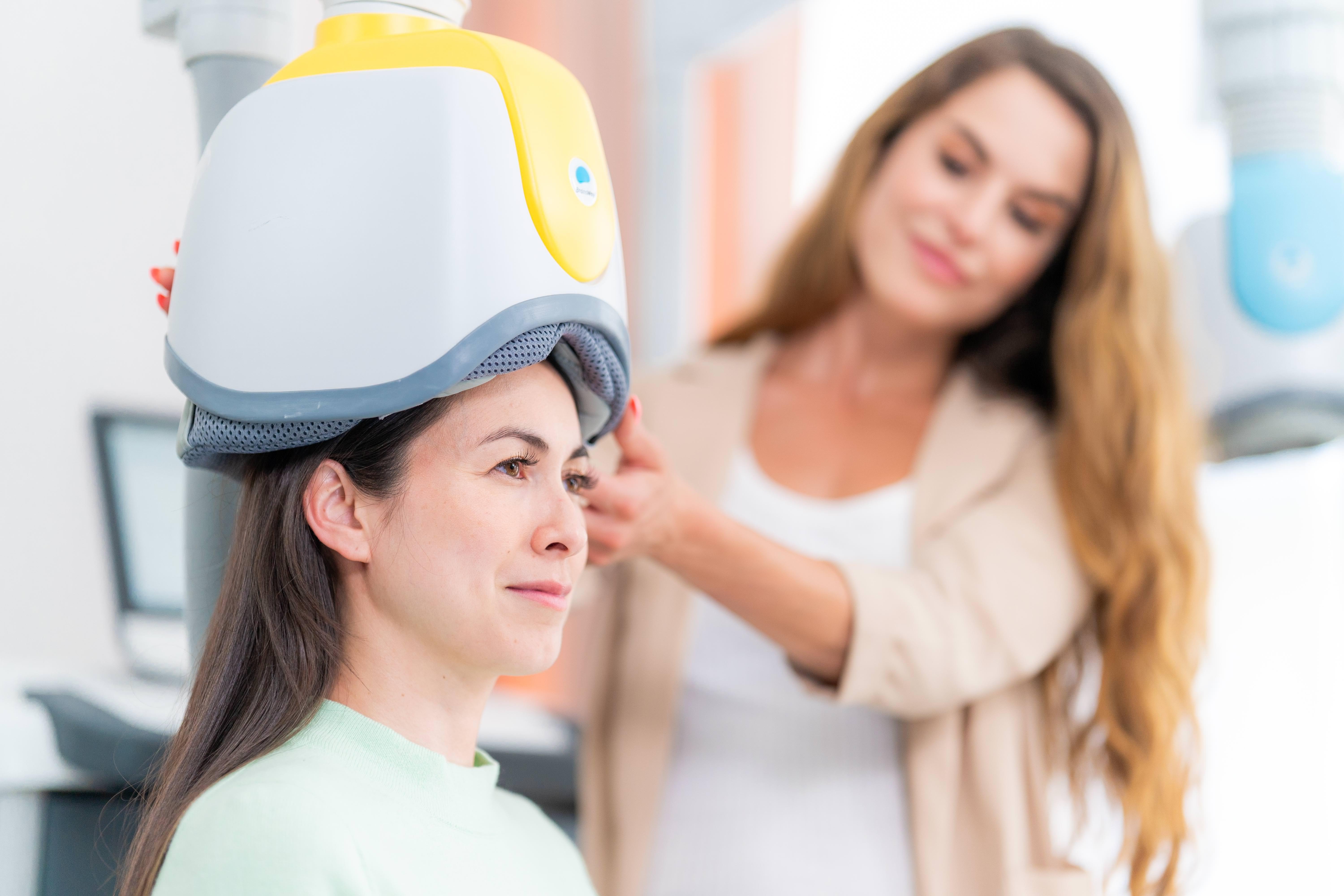
Deep transcranial magnetic stimulation (dTMS) is a noninvasive, office-based, FDA-cleared treatment for adults whose OCD symptoms remain disruptive. It is used as an additional part of a broader care plan.
BioMental brings more than 20 years of psychiatric experience and nearly a decade of caring for treatment-resistant conditions. We work with you and your current providers to determine whether dTMS may offer another evidence-based path forward and help navigate insurance requirements when coverage is available.
OCD can consume valuable time through intrusive thoughts, fears, urges, compulsions, and mental rituals. Meaningful progress may include:
OCD involves intrusive thoughts, fears, urges, or images and the repetitive behaviors or mental rituals used to reduce distress. Symptoms can consume time and interfere with work, school, relationships, and daily routines.
BrainsWay Deep TMS is an FDA-cleared, office-based adjunctive treatment for adults with OCD. The H7 Coil delivers magnetic pulses to medial prefrontal and anterior cingulate regions within brain networks involved in OCD symptoms. Treatment is non-invasive and performed while you remain awake and seated.
Brief personalized symptom activation is part of the OCD treatment protocol before stimulation; it is not a psychotherapy session.
dTMS may be combined with medication management and psychotherapy delivered individually, in groups, or through a structured program. Therapy may include cognitive behavioral therapy (CBT), particularly exposure and response prevention (ERP), and DBT skills when appropriate.
You do not need to pursue every option or begin everything at once. We will consider your experience, treatment history, needs, and preferences to decide what fits your recovery journey and when.
Headache or discomfort of the scalp, face, jaw, or neck may occur, especially early in treatment. These effects are usually mild and often lessen as treatment continues. Tell the team about any discomfort so the helmet position or stimulation settings can be adjusted.
In the pivotal randomized study, 38.1% of patients receiving active dTMS achieved at least a 30% reduction on the standard OCD symptom scale (Y-BOCS) after six weeks, compared with 11.1% receiving sham treatment.
In a later observational study across 22 clinics, 57.9% of patients with follow-up scores met response criteria after 29 sessions. This study did not include a sham comparison.
In clinical practice, dTMS may be integrated with psychotherapy, medication, and other supports. Coordinated care may support progress, although individual results vary.
dTMS may be appropriate for adult patients diagnosed with OCD who continue to have symptoms despite standard treatment.
Treatment does not require anesthesia or sedation. Most patients can return to usual activities afterward.