

Vagus Nerve Stimulation

An FDA-approved, implant-based option for adults whose depression has not improved enough with standard treatment.

Advanced Depression Care

VNS is a long-term option for chronic or treatment-resistant depression.

Vagus nerve stimulation, or VNS, uses a small implanted pulse generator connected to the left vagus nerve. The device sends scheduled electrical pulses that influence brain circuits involved in mood regulation.

For depression, VNS Therapy is used as an adjunctive long-term treatment for adults with chronic or recurrent depression who have not had enough benefit from several antidepressant treatments.

BioMental Clinic helps patients compare VNS with options such as TMS, SPRAVATO / esketamine, ketamine, medication management, and psychotherapy so the next step fits the treatment history and goals.

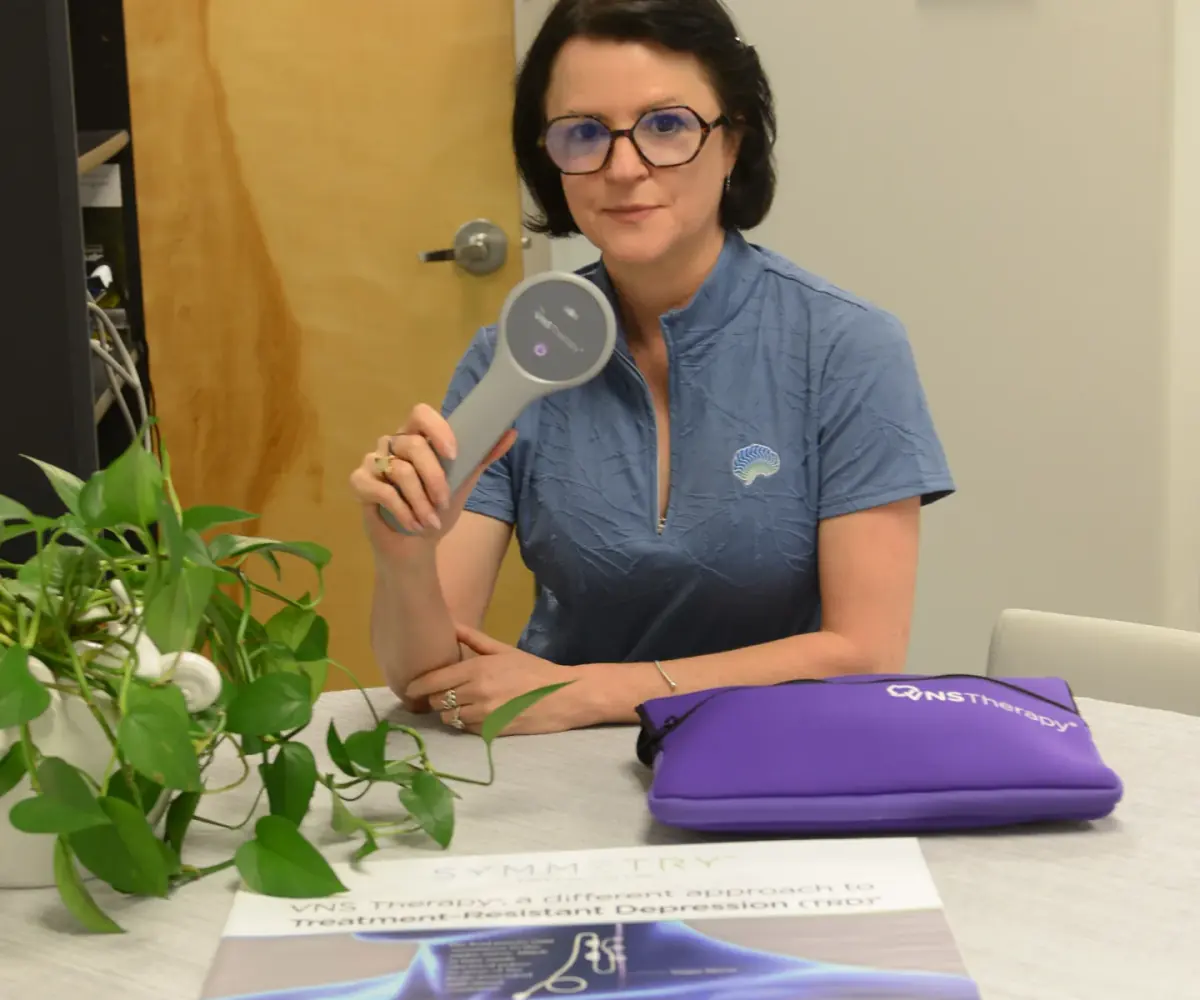
Dr. Alina Galliano demonstrating VNS Therapy materials at BioMental Clinic

When To Consider VNS

VNS enters the conversation after several standard options have not been enough.

The starting point is a clear review of diagnosis, symptom severity, prior medication trials, psychotherapy history, and response to other advanced treatments.

Because VNS involves an implanted device, the plan usually includes coordination with outside specialists for surgical placement and device management alongside ongoing psychiatric care.

VNS may be worth discussing if you have

  • Chronic or recurrent depression with limited response to multiple medication trials
  • Persistent symptoms despite therapy and structured psychiatric care
  • Questions about VNS compared with TMS, SPRAVATO / esketamine, or ketamine
  • A preference for a coordinated long-term plan with psychiatry and outside specialists

What We Review

The visit clarifies fit, alternatives, coordination, and follow-up.

A VNS consult covers the treatment target, prior treatment response, medical history, likely referral pathway, and how improvement would be tracked over time.

When VNS is not the strongest next step, the plan may instead focus on TMS, SPRAVATO / esketamine, ketamine, medication changes, psychotherapy, or coordination with current providers.

Next Steps

How to get started

If you want to review whether VNS belongs in your treatment plan, these are the usual next steps:

Next Steps

  1. Request a consultation
  2. Complete a psychiatric evaluation and treatment history review.
  3. Compare VNS with TMS, SPRAVATO / esketamine, ketamine, and other advanced options.
  4. Coordinate referral planning or follow-up if VNS is an appropriate next step.

Frequently Asked Questions

Frequently Asked Questions

Is VNS the same as TMS?

No. TMS is a non-invasive office-based treatment, while VNS involves an implanted device and a different long-term treatment pathway.

Who usually asks about VNS?

Adults with chronic or treatment-resistant depression often ask about VNS after multiple medication trials, therapy, or other structured treatments have not provided enough relief.

Does VNS replace medication or therapy?

Usually not. VNS is an adjunctive treatment, which means it is typically considered as one part of a broader care plan.

How do I know whether to ask about VNS or TMS?

That decision starts with a clinical evaluation. We review your history, current symptoms, and prior treatment response to decide which options are most reasonable to discuss.

Contact Us

General Inquiries

For general questions, use this form and our team will follow up. Ready to request a consult? Please complete the consult request form.

Prefer to call? Reach us at 904-853-5867.